Scaling Liquid Cooling: Closing Gaps in Interoperability and Validation
NINGBO, ZHEJIANG, CHINA, November 27, 2026 /EINPresswire.com/ -- As artificial intelligence (AI) workloads grow,
Press Release Disclaimer: This is a press release distributed through the XPR Media network. It has not been independently verified by our newsroom.

NINGBO, ZHEJIANG, CHINA, November 27, 2026 /EINPresswire.com/ — As artificial intelligence (AI) workloads grow, per-rack power density has moved beyond what air cooling can practically handle. Buyers now need cooling systems that offer not only sufficient thermal capacity but also clearly defined interfaces and operating requirements. Liquid cooling equipment is evolving quickly, yet the rules that govern the industry lag well behind: connector dimensions, rating conditions, test and acceptance methods, and fluid management are still largely defined by individual vendors. This means that, even where thermal performance is adequate, inconsistent interfaces and validation practices can hold back deployment at scale. Clear interface requirements and agreed test methods help reduce integration risk.
Inconsistent Rating and Validation Practices
The gap between liquid cooling deployment and standardisation is a structural feature of scaling this technology. Equipment iteration is driven directly by compute demand, whereas interoperability, fluid chemistry and safety specifications depend on much longer consensus cycles. Existing standards offer a reference for acceptance testing and fluid management, but how they are applied still varies from project to project. International responses are already under way. In August 2024, the International Telecommunication Union Telecommunication Standardization Sector (ITU-T) published Recommendation L.1327, which brings cold plate, immersion and spray liquid cooling within a single framework for selecting cooling technologies. The Open Compute Project (OCP) continues to produce baseline specifications for cold plates and coolants. In October 2025, it formed an alliance with the American Society of Heating, Refrigerating and Air-Conditioning Engineers (ASHRAE) to draw up a joint roadmap for aligning standards between facility-side cooling loops and equipment-side liquid cooling. Because these documents differ in scope and uptake, project teams still have to reconcile interface and acceptance requirements themselves. Buyers should identify which documents apply and close any remaining gaps in the project technical agreement.
Capacity ratings are a case in point. For a liquid-to-liquid coolant distribution unit (CDU), cooling capacity must be stated together with the rating conditions. In this context, approach temperature means the difference between the secondary supply temperature and the primary inlet temperature; it should not be confused with the supply-to-return temperature difference within either loop. Rating points vary across the market: some units are rated at a 4 °C approach temperature; others at 8 °C or even 10 °C. Because a larger approach temperature yields a higher headline capacity from the same hardware, figures stated at different approach temperatures are not directly comparable. Capacities should therefore be compared at equivalent operating conditions, and supply temperature, fluid composition, flow rate, available external differential pressure and performance in the required redundancy configuration should be checked as well.
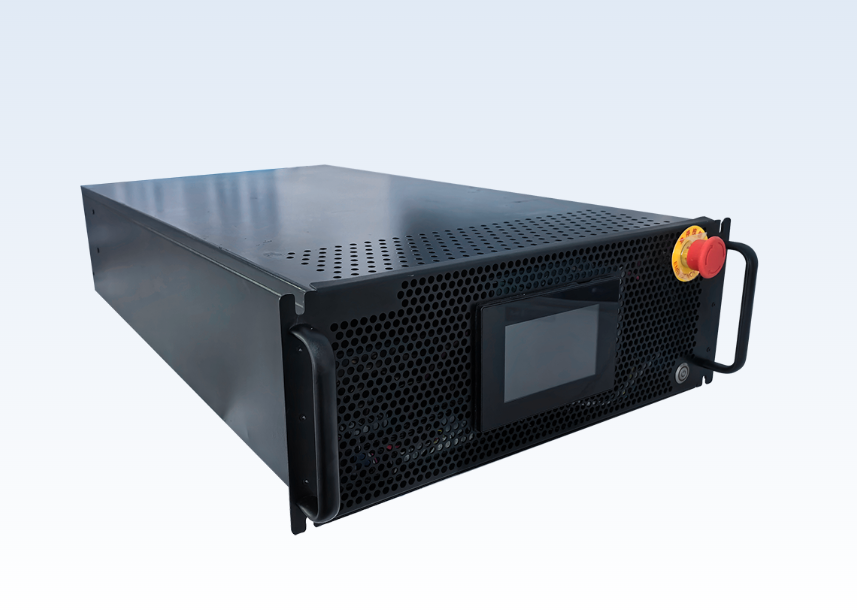
BLUEOCEAN CDU for a cold-plate liquid cooling system.
Interoperability problems are equally tangible, and quick disconnects (QDs) are the clearest example. A QD has to stay sealed throughout its rated service life and rated number of mating cycles, yet connectors from different brands may fail to mate, engage the seal only partially or seep slowly. Cross-mating tests can identify compatibility issues even when products reference the same specification. Interoperability should therefore be verified for the specific product combinations, fluids and operating conditions used in the project. Where interfaces change, server refreshes may require additional compatibility testing, component replacement or loop commissioning.
All of this adds project-specific engineering work, cost and lead time. Common specifications, documented compatibility and agreed acceptance criteria are what make liquid cooling deployments repeatable.
Progress towards Interoperable Systems
Efforts to develop multi-vendor liquid-cooled rack specifications date back to at least 2018, when a working-group progress update from Lawrence Berkeley National Laboratory (LBNL) already pointed to the need for reusable infrastructure and common interfaces across server generations. Progress has accelerated over the past two years and in more than one market. In August 2025, Intel and five suppliers launched a universal quick disconnect (UQD) interoperability initiative to validate cross-vendor mating for specified connector combinations. Through its certification programme, the initiative unifies connector design and quality requirements and establishes a test benchmark for cross-brand mating.
Standardisation is also accelerating in China, which gives manufacturers expanding overseas a reference point. GB/T 48023-2026, Technical specifications for cold plate liquid cooling system of data center, was issued on 30 July 2026 and will take effect on 1 February 2027. China’s first national standard for data centre liquid cooling, it covers the full chain from cold plates, quick disconnects, CDUs and coolants to installation, test verification and operations and maintenance. Before that, YD/T 6049-2024, the first industry standard for liquid-cooled full-rack servers, led by the China Academy of Information and Communications Technology (CAICT), had already been issued. An association standard project on general technical requirements for high-density liquid cooling systems in data centres, organised by the China Communications Industry Association Data Center Committee (CIDC), was approved in April 2026, followed by a drafting kick-off meeting in October. The project addresses system design, interoperability and evaluation requirements. Vendors that once defined their own interfaces individually are beginning to compete on a shared set of rules. Obstacles remain, however: the IEA 4E EDNA report Liquid Cooling in Data Centres, published in June 2026, still lists standardisation, alongside initial cost and long-term reliability, among the barriers to adoption.
How Suppliers Contribute to Standards Development
BLUEOCEAN is listed among the drafting organisations of YD/T 6049-2024. It also participates in the CIDC-organised association standard project on high-density liquid cooling systems. At Data Centre World (DCW) Singapore 2025 and the DITC Symposium on Digital Infrastructure Technology Innovation and Standards Coordination 2025, the company met Southeast Asian operators and industry bodies to discuss modular liquid-cooled compute pods and international standards alignment. By ISCT’26 (International Symposium on Computility Technology Standards and Applications) and the Digital Infrastructure Forum for Global Cooperation (DIFGC) 2026 Bangkok Forum, its role had shifted further, from participant to host of the liquid cooling session, bringing high-heat-flux cooling and immersion liquid cooling onto the regional agenda. BLUEOCEAN’s pump-driven two-phase cold-plate cooling technology was selected as one of the ISCT’26 annual innovation practices. These activities show international engagement and technical collaboration, but they are not evidence of delivery capability, which has to be assessed separately, on the basis of project references and acceptance records.
BLUEOCEAN co-founder Aaron Wang at ISCT’26.
On the product side, BLUEOCEAN’s portfolio spans both cold-plate and immersion liquid cooling, with standardised products ranging from CDUs to prefabricated liquid cooling modules. Its in-house technology includes coolants, sealing design, control algorithms and modular components. According to BLUEOCEAN, it has filed more than 260 intellectual property applications, over 60% of them for invention patents. It also operates a smart factory for standard immersion cooling modules, with containers and custom components sourced under long-term arrangements from state-owned suppliers.
An integrated supplier can simplify interface coordination and clarify responsibility for system performance. Even so, buyers should ask for documented compatibility with the chosen servers and facility systems, agreed acceptance tests and provisions for future component replacement. These requirements limit integration risk while keeping options open for maintenance and future procurement.
Conclusion
The rules of the liquid cooling industry will not mature on their own. How quickly they take hold depends on two groups: those who turn field engineering experience into standard clauses and those who can deliver against them. Repeatable deployment requires documented interfaces, validated compatibility and clear acceptance criteria. Buyers should weigh these deliverables alongside a supplier’s contribution to standards development and its verified project record.
Frequently Asked Questions
Q1: For GB300-class high-density racks at 100-155 kW, should buyers choose cold-plate or single-phase immersion cooling?
A: The choice depends less on maximum heat-removal capacity than on existing facility conditions and the intended operations and maintenance (O&M) model. Cold-plate cooling is easier to retrofit into existing air-cooled data halls and can be introduced rack by rack, which suits phased upgrades. Single-phase immersion keeps component temperatures more uniform at very high heat flux but requires re-engineering of floor loading, service access and coolant management. BLUEOCEAN offers both routes: single-phase immersion is its main product line, complemented by microchannel cold plates and pump-driven two-phase cold plates. The mix can be matched to the conditions at each site.
Q2: With coolant standards not yet unified, how should an immersion coolant be selected?
A: Prioritise suppliers that develop their coolant in-house and can furnish thermophysical property and material compatibility data. BLUEOCEAN’s immersion coolant is developed entirely in-house and has passed an industry-level technical appraisal in China. Coolant formulation, material compatibility validation and sealing design are handled within the same engineering programme, without reliance on third-party fluids. Because single-phase immersion cooling does not rely on boiling, the coolant degrades more slowly under sustained full load, and the fluid-management complexity of two-phase systems is avoided. In procurement, require the supplier to specify the coolant’s origin, test protocols, and replacement intervals and write these terms into the technical agreement.
Q3: How should PUE, WUE, and delivery milestones be defined in overseas project contracts?
A: Contracts should define the measurement boundaries, reporting periods, meter locations, load profiles and ambient conditions for power usage effectiveness (PUE) and water usage effectiveness (WUE) and assign responsibility for deviations. They should also specify redundancy, leak detection and isolation requirements. For prefabricated pods, the factory-integration scope should be confirmed against the selected design, with separate factory acceptance tests, site acceptance tests and readiness milestones. Product development and production-readiness timelines should be kept distinct from customer project delivery schedules, and any delivery commitment should state the site prerequisites and commissioning milestones. Whether a given solution suits a site depends on its power, water, climate, permitting and operational requirements and should be confirmed by a project-specific engineering assessment.
Blueocean
Blueocean
Legal Disclaimer:
EIN Presswire provides this news content “as is” without warranty of any kind. We do not accept any responsibility or liability
for the accuracy, content, images, videos, licenses, completeness, legality, or reliability of the information contained in this
article. If you have any complaints or copyright issues related to this article, kindly contact the author above.

Media gallery