How much square footage a $500K housing budget buys across US metros
Offerpad reports that regional cost per square foot varies widely in the U.S., affecting real estate pricing. Coastal
Press Release Disclaimer: This is a press release distributed through the XPR Media network. It has not been independently verified by our newsroom.
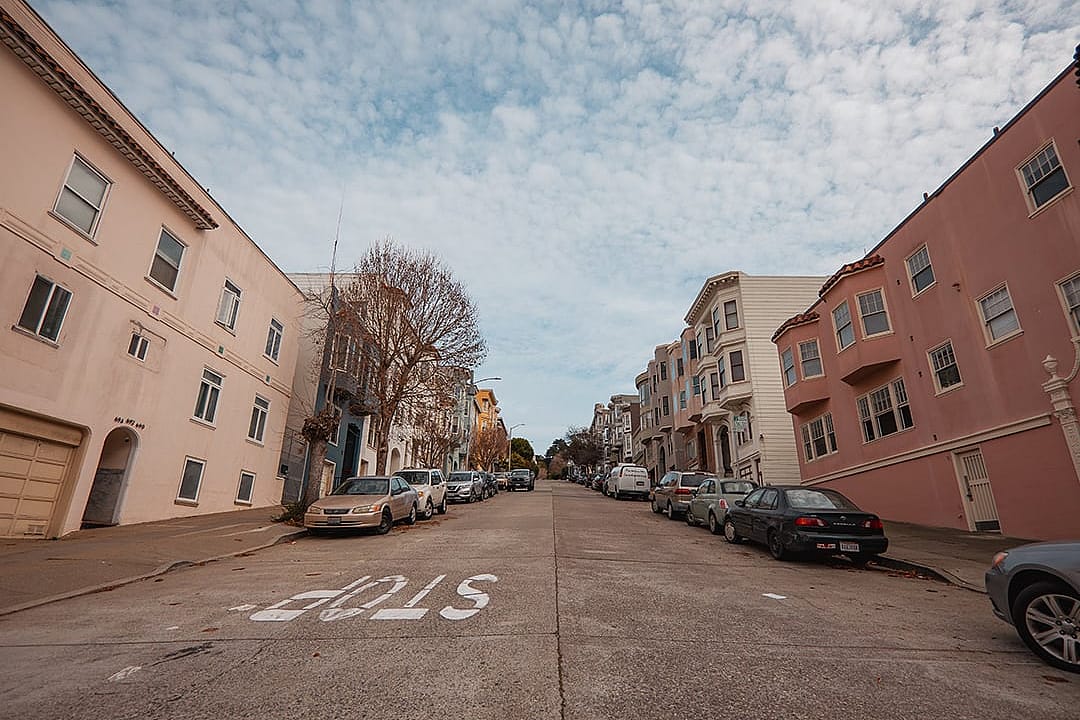

Poggensee // Shutterstock
The regional differences between cost per square foot are an important metric for any real estate agent to understand. This information helps agents properly price properties while advocating for and advising their clients. Without having the data to back their decisions, agents will find themselves losing potential sales.
Some U.S. metro areas give buyers access to generous floor plans for $500,000, while others provide much smaller spaces for the same amount of money.
There’s ample data on median square footage prices available, with the Federal Reserve Bank of St. Louis’ monthly update being a vital source in determining typical costs across the nation’s biggest urban regions. Offerpad, a real estate technology company, examined how much square footage a $500,000 housing budget would buy across various U.S. metros.
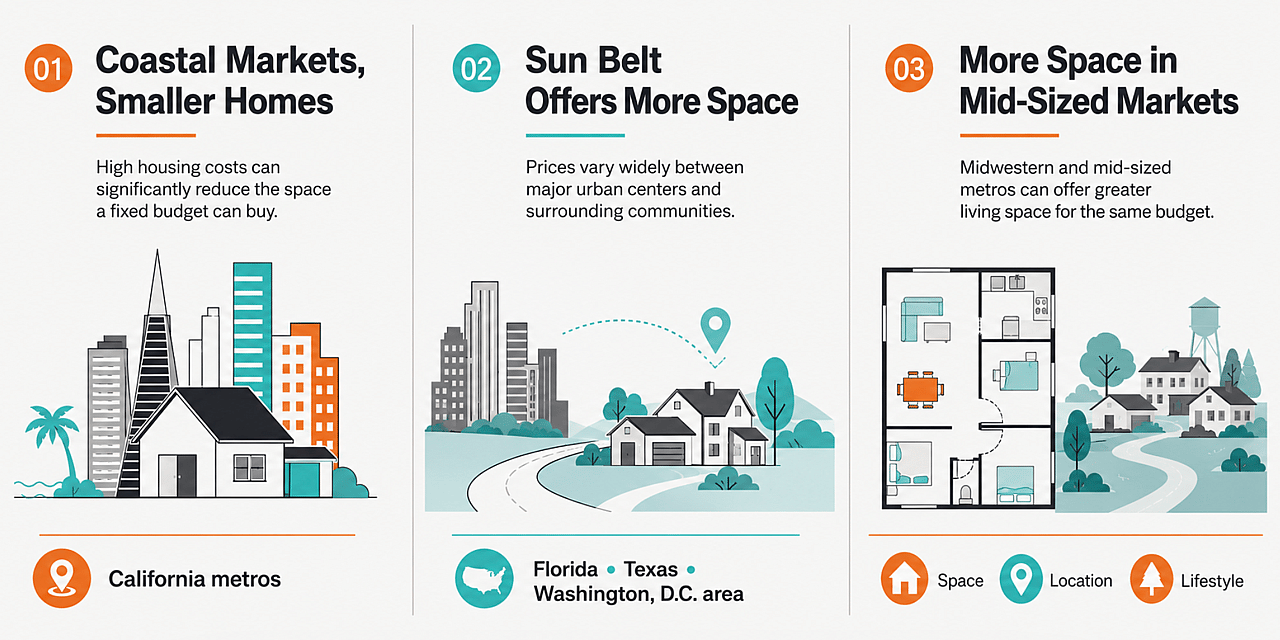
Offerpad
Sky-High Square Footage Costs in California
Metros in California are among the most expensive in the U.S., both on a per-property basis and in terms of the median cost per square foot, as per FRED’s dataset. While some parts of California remain comparatively affordable, the hubs of the tech industry in San Francisco and the entertainment industry in Los Angeles remain at the upper end of the price spectrum.
The price per square footage in the San Francisco-Oakland-Hayward metro area sat at $629 in July 2026. That’s actually down from the same period last year, when residents could expect to pay $661 per square foot for a typical property listed in this area. With a budget of $500,000, that equates to 794 square feet of floor space, well below the national average of 1,841.
Over in the Santa Maria-Santa Barbara metro, $880 is the median price per square foot of a property, bringing the size of a half-million-dollar home down to 568 square feet. That’s little more than a one-bedroom condo or a studio apartment. Meanwhile, the Los Angeles-Long Beach-Anaheim metro has a median cost per square foot of $659, nearly matching the costs in San Francisco last summer, where $500,000 could buy a 758-square-foot space.
California’s real estate market continues to represent a high barrier of entry for first-time buyers, while also justifying its high costs per square foot in economic powerhouses like Los Angeles and San Francisco. Sellers can still expect to achieve the high valuations given to even smaller properties because phenomena like the artificial intelligence boom are creating adequate demand from affluent buyers.
Sun Belt Sprawl Brings Mixed Returns
Moving away from the Pacific Coast into the Sun Belt reveals a vastly different value proposition for a half-million-dollar budget. While high-growth hubs in Florida and Texas have experienced noticeable price appreciation over the last five years, floor plans remain comparatively generous compared to coastal California.
In the Washington-Arlington-Alexandria metro area, median square footage listing prices hover around $305. A $500,000 allocation in the nation’s capital and surrounding suburbs yields roughly 1,639 square feet. While this offers considerably more breathing room than coastal urban centers, it still sits below the historical purchasing power of mid-Atlantic real estate.
Further south, Florida presents a wider range of possibilities depending on proximity to major metros. The Miami-Fort Lauderdale-West Palm Beach area averages around $356 per square foot, shrinking a $500,000 budget down to roughly 1,404 square feet. Inland hubs like Orlando-Kissimmee-Sanford feature median costs near $223 per square foot, expanding that same budget to over 2,242 square feet.
Regional migration continues to bolster these housing markets, but inventory growth in specific suburban pockets helps keep space somewhat accessible. Agents should inform buyers that those who prioritize total square footage may find that moving just 30 to 40 minutes outside a primary downtown core doubles their functional floor plan.
Midsize and Midwestern Metros Deliver Maximum Space
For agents with clients intent on maximizing total interior acreage, midsize cities and Midwestern markets offer the strongest leverage for a $500,000 price point. These regions have generally avoided the extreme supply-and-demand imbalances seen along the coasts, keeping cost-per-square-foot figures grounded.
Across broader statewide trends in Texas, median listing prices per square foot hovered around $183, with this exact figure found in metros including Sherman-Denison, and $163 in Odessa. At that $183 valuation, a $500,000 purchase price secures an expansive 2,732 square feet of living area, easily accommodating four bedrooms and spacious common areas.
Midwestern staples like Detroit and St. Louis routinely report median listing rates well below the $200-per-square-foot threshold, with the former sitting at $186 and the latter at $164. In these markets, half a million dollars shifts a homebuyer out of the starter category entirely, granting access to premium builds, sprawling lots, and executive-style properties.
How Agents Help Buyers Find a Balance
Ultimately, $500,000 remains a formidable budget in the current real estate climate, but its purchasing power is determined entirely by geography. Agents must help buyers decide whether they prefer prime location density or expansive suburban footprints when putting their capital to work. Other factors, such as the availability of employment and the quality of life in the regions they choose, must also be weighed against the raw cost per square foot of properties in a given metro.
This story was produced by Offerpad and reviewed and distributed by Stacker.